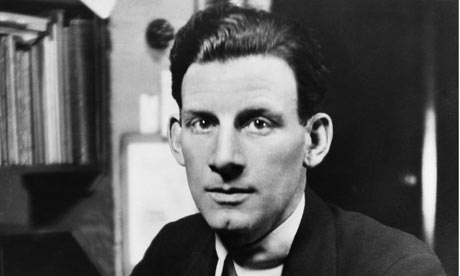
"Base Details" by Siegfried Sassoon

            In spite of the fact that I am such an avid reader, I am not very fond of poetry. I would much rather find myself lost in the pages of a heavy tome than confounded within the lines of poems. For as long as I can remember, analyzing (and simply understanding poetry) has been a weakness of mine. Today, however, I am going to be taking on “Base Details” by Siegfried Sassoon.
            As I found myself reading through the poem, the message I believed Sassoon was trying to convey was that there was a stark difference between soldiers and Majors, yet creating a satiric tone while doing so.  He gives the reader the impression that soldiers are forced to do the fighting, while the Majors are given the luxury of safety. This overall meaning was illustrated through Sassoon’s use of poetic devices, the most prominent being imagery. The first example was given as the poem reads, “I’d live with scarlet Majors at the Base,/ And speed glum heroes up the line to death” (2-3). Sassoon utilizes vivid diction as a portrayal of two things: the treatment of soldiers, and how they feel about it. We now see that the Majors are aiding the soldiers in their demise as they force them to the line of battle, or “death” as Sassoon writes, however, we also see that they are unhappy about it. As Sassoon refers to the soldiers as “glum heroes,” we learn of the disparity behind their heroic action.
            This use of imagery is continued throughout “Base Details” and Sassoon sets the tone with his diction, but the end of the poem best exemplifies this point. The poem states, “And when the war is done and youth stone dead, / I’d toddle safely home and die – in bed” (9-10).  These two lines are the epitome of everything Sassoon meant the poem to be; as the war comes to a close, the soldiers who were willing to give their all will be gone, while those who were watching from the sidelines will be able to return home. He uses imagery such as “stone dead” and “toddle safely home” to place emphasis on this point – the Majors will be able to stroll back unscathed while the glum heroes will be the ones left behind, stone dead.
            Upon completing this poem, I felt slightly differently about analyzing and understanding poetry. Whether it was Sassoon’s style or my fascination with the era of the First World War, something drew me into this poem. The way the imagery intertwined with the purpose of the poem worked well and created a critical tone that made the poem enjoyable, yet significant and important. The satirical style of the poem was consistently evident and Sassoon’s imagery highlighted it well.

Pride and Prejudice and Zombies: Book Talk

Title: Pride and Prejudice and Zombies
Author: Jane Austen and Seth Grahame-Smith

Goodreads Rating:  (3.27)
My Rating:  (4)

            I walked into Pride and Prejudice and Zombies with much anticipation, but loads of skepticism clouding my excitement. In all honesty, I wasn’t really sure what to expect. When I purchased my copy of the book, one of the first things I noticed was that it listed both Jane Austen and Seth Grahame-Smith as the authors. This eased my worries a little; I no longer felt that Austen’s language would be utterly butchered as the book must have contained a majority of it to keep her as a contributing author. Once this was settled, I was able to delve into the novel. After I did, I can say with ease that I was not disappointed.
            For a quick synopsis of the book: set in 19th century England, a plague sweeps throughout the nation and basically leaves the countryside in a state of war. The Bennet sisters, who are highly trained in the defensive arts, are battling those who are taken ill by this mysterious plague, all while fighting the force of their mother who (as in the original novel) is captivated by the idea of her daughters marrying into well-off families. From here on, the plot basically remains the same, but with a lot more zombies and battles.
            Before reading this book, I read many reviews where readers were left feeling unsatisfied and disappointed. I was under the impression that I would feel the same, however, I most certainly do not. I truly enjoyed reading it and reemerging myself in the world of Pride and Prejudice. Before I begin, I'd like to point out the illustrations. They really enhanced my experience as I really enjoy reading books when the occasional image is thrown in there. Aside from that, I think the main thing I liked about it was that it read like a Jane Austen book; I could open up to any page and it would feel (for the most part) as if I were reading Austen’s original work. The additions and changes that Grahame-Smith made did not feel too tacky or overdone, they felt modern and entertaining. I also really loved how cinematic it felt. The true driving force that inspired me to read the book was that it is being adapted into film. The further I found myself in the book, the more I could visualize the movie; there are some books that translate well on-screen, and this seems to be one of them. Although I feel the imagery for the plague and zombies could have been better provided in the book itself, the idea of the book as a whole is an exciting idea for a film, and I am very much anticipating it!
            As someone who enjoys reading YA fiction and classic literature, this book felt like an amazing fit. The addition of the zombies did not feel too far fetched as I still find joy in reading Young Adult novels set in fantasy worlds. When this was mashed with one of my favorite classics, I did proceed with caution, but in the end I found myself delighted. In the end, I’d have to give the book 4 stars. It was a fast paced, fun read and I really enjoyed myself, but I felt that the author held back on the whole zombie battle aspect. The book wasn’t original enough for it to garner a 5 star review from me. Last but not least, spoiler alert, I’m so glad Charlotte Lucas got the plague. Definitely saw that one coming.


Persuasion: The Art of Persuading Readers to Find Irony

            As I have previously discussed, Jane Austen is well known for her satiric critique of social class, and Persuasion is not exempt from this Austen-esque mannerism. From its very opening line, Austen makes it clear that that this novel is to prominently feature status and wealth within its pages. She exemplifies her satiric style in many ways throughout Persuasion, beginning with the way she crafts her characters to create her desired tone.
Characters - Jane Austen for children - Part 5 | Jane Austen Brazil:             Although it seems simple, the way Austen writes her characters illustrates her critique upon social class. She crafts many characters who focus themselves upon status, wealth, and looks. For starters, we have the Elliot family. Sir Walter Elliot is so concerned with status that the only book he concerns himself with is the Baronetage, which is a record of British nobility. He even goes so far as to criticize the Navy because it has a “means of bringing persons of obscure birth into undue distinction, and raising men to honours which their fathers and grandfathers never dreamt of” and he also believes “it cuts up a man's youth and vigour most horribly” (19). Although Anne Elliot had pointed out that they were deserving, hardworking men, Sir Walter made sure to emphasize the point that it gives them a false sense of status and ruins their looks – the two qualities he holds to the highest regard. The way she crafted such a character conveys satire in a very specific manner; Sir Walter Elliot serves as a device to help Austen establish an ironic tone in the beginning of the novel. He is the first character we are introduced to, and right off the bat we are given a character of nobility who is only concerned with status; he exudes conceit and arrogance, which are characteristics of the high society-types Austen is satirizing.              
            This pattern is continued throughout Persuasion with a multitude of other characters. We are presented with others such as the rest of the Elliot family and Lady Russell, Anne’s mentor who encouraged her to end her relationship with Wentworth as she deemed him unworthy. Although he comes into great wealth later on, when he and Anne first meet, he is not believed to be of high enough income or status to marry her. Her family and mentor look down upon him in result, which furthers the tone Austen is trying to create; in spite of the fact that Anne is happily in love, the main concern here is social status, so her family really does not care and they encourage her to end things anyway.
           Austen’s classic criticism of social class shines through in Persuasion just as it does in any other – her social climbing characters help to carry on her witty and ironic style and prove her satiric work. Their mannerisms, attitudes, and auras all emanate the impression that they are better than everyone else; they come across as the conceited, upper class characters Austen meant to criticize. For Austen, revealing this ironic tone is an art and she does so differently each time. In the case of Persuasion, Sir Walter Elliot harbored it and portrayed it from the very beginning. 

"O": A Film Review


Cast: Julia Stiles, Mekhi Phifer, Josh Hartnett, Andrew Keegan

Director: Tim Blake Nelson

Avg. Rating: 

My Rating: 


Thanks to my new-found love of Othello (and my everlasting love of Josh Hartnett), I found myself watching O. For those who don't know, O is a rather modern retelling of Shakespeare's Othello in which the characters are high school students in attendance at a prep school. The movie as a whole, while not unpleasant, was just so far from Shakespearean quality that one cannot help but think of it in a disapproving light.
I felt that O was a decent film; it followed the basic plot and structure of Othello, the actors were all rather suitable, and the overall atmosphere felt reminiscent of the original work. In spite of this, the film just could not pull together to form a stellar adaptation. Here we have Odin (Othello) and Hugo (Iago). The setting of the film and nature of their friendship makes the film feel very Othello meets A Separate Peace - you have these two friends who, although on the surface appear to be fine, have underlying issues as Hugo feels Odin is outshining him in all areas. This could have made for a great film had it not been an adaptation, however, I have just become so partial to the original work that I can no longer picture it in any other way.  
         Disregarding the text, the film still could have used work. Although the actors did a fair job at conveying the emotions required for a Shakespearean adaptation, the overall plot dragged the quality down. The fact that Odin and Hugo were basketball playing teens in attendance of a prep school made some parts of the film seem tacky and overdone. The soundtrack was right there to reinforce this atmosphere.
          As a whole, O was not a film I looked upon with distaste. I found myself enjoying the film here in there because it gave Othello a modernized feel and made it more relatable; everyone experiences jealousy, but translating the story to the present day made it feel more realistic to me (although I still enjoy the original more). I feel that if I were to look at O and Othello as separate entities, each would hold their own qualities that would make them great.


The Significance of Social Status

            It was once recommended to me that if I enjoyed Pride and Prejudice, I should continue my Jane Austen experience with Persuasion. When given the task of selecting a work of satire to read and blog about, this recommendation immediately came to mind. When reading Pride and Prejudice, I really enjoyed the way Austen satirized social class; her effortless wit and eloquent diction made for an agreeable read. If I enjoyed my first Jane Austen novel so much, what would make the second any different?
Jane Austen:             Although I may only be roughly halfway through the novel, Persuasion has not failed my theory quite yet. From its very first lines, I knew that her commentary on social classes would be right up to par with that of Pride and Prejudice; I was utterly convinced as Austen drew me in with, “Sir Walter Elliot, of Kellynch-hall, in Somershire, was a man who, for his own amusement, never took up any book but the Baronetage…” (3). For those who don’t know, the Baronetage Austen speaks of is in reference to The Baronetage of England, a book which lists all British nobility. Right from the start, it becomes clear that Austen is satirizing the way people of her time viewed wealth and status as she references this book that tracks those of high society.
            Now, don’t get me wrong here – Austen’s style and commentary did catch my attention, but they were not the first thing that came to mind as I perused the first half of Persuasion. What truly caught my attention is that Austen’s criticism can still be pertinent 198 years later (score one for literary merit!). Just yesterday I finished the satiric Crazy Rich Asians duology written by Kevin Kwan and I found myself making so many comparisons between these two novels and Persuasion; although Kwan was published within the last few years, his work has been compared to that of Austen’s countless times as he sarcastically writes about wealth, status, and love. As a reader, it is a pleasurable experience to find novels published approximately 200 years apart, yet still have the opportunity to find parallels between them. The blend of history and the present day has already made Persuasion all the more exciting to read!
            As I make my way through the rest of Persuasion, I’m hoping that I am able to find more features that are still relevant to life today. We still view social status with high regard in the modern day whether we realize it or not, and seeing what Austen has to say about it in her day is fascinating. My goal for the end of the year is to have made my way through as many of Austen's works as I possibly can; I would like to wade through each novel and examine her satirical commentary.


Who's to Blame?

       Because Othello by William Shakespeare follows a complex course of events, I often found myself confounded. It wasn’t that I did not understand what was happening, it wasn’t a miscomprehension of Shakespearean language, and it wasn’t a general lack of knowledge pertaining to the play. The problem with Othello was simple: who is to blame? Is it our tragic hero, Othello, thanks to his hamartia? Could it be Iago, his ancient, with his manipulative tongue and wicked demeanor?

       For me, it is extremely difficult to place blame on one or the other. Both had their fair share of actions that spiraled into further problems, but with further contemplation, I felt that Iago was the clear choice. No matter what the happenings were within the play, Iago could be found in their midst, typically controlling the situation through is lies and devious actions.

       To begin his madness, Iago finds it most suitable to inform Desdemona’s father of her elopement to Othello. However, it must be clear that he does not do this on his own, but he enlists the help of Roderigo. Right from the start, he traps four people within his elaborate plot for revenge. Once Brabantio is aware of the marriage, he is just as angered as Iago would have hoped for. Although this was simply fate assisting Iago’s scheme, he was the man who got the ball rolling.

       As Iago is driving a wedge between Othello, Desdemona, and her father, he is also thinking of ways to weave Cassio into his plan. When he sees Cassio greeting women with a polite kiss, he begins to consider the idea that he can convince Othello that Desdemona is truly in love with his lieutenant. Since he is Iago, he can’t simply end things here, so he gets Cassio drunks, starts a fight, and Othello fires Cassio. Still think Othello could be to blame for the tragedy?

       Just when you think Iago is filled to the brim with blame, he plans another scheme. He musters up a plot to solidify the idea that Cassio will get involved in his revenge; Iago, under the false pretenses that he is helping Cassio, suggests that he appeals to Desdemona to get his job back. After a long sequence of events, this leads to Cassio ending up in possession of Desdemona’s handkerchief, which he gives to his mistress. Of course, Othello happens to see this, and the endless tragedies follow suit.

       One may argue that had fate not come into play, Iago’s plans would have crumbled beneath him. However, he still pursued these endeavors, all while Othello was kept in the dark. Throughout Othello, the only people made aware of the truth were Iago and the audience; if Othello had been unknowingly falling into Iago’s trap, how could be to blame? Othello made it clear that he felt so passionately for Desdemona that nothing else mattered to him; he was so blinded by love, so ardent about their marriage that he was willing to do anything. Iago was aware of this fervor and took advantage of that as he sought revenge, and for that he is truly to blame. 

The Road to Self-Discovery

       If we were to take a look at our identities, most of us would find ourselves confused. From time to time, we all wear masks and we alter our identity when we desire conformity. Ask yourself this: how do we respond to outside influences while remaining true to ourselves? On many occasions, I have found myself in situations where I felt my true identity should be suppressed. When there are so many expectations placed upon us, it is tremendously difficult to just be yourself. It is becoming astoundingly ordinary that these forces greater than ourselves can manipulate our identity, and since literary themes are reflective of true-to-life scenarios, it seems reasonable that many works of literature possess this idea as well.  

            The unnamed protagonist of Ralph Ellison’s Invisible Man is a sheer portrayal of someone struggling to hold on to their identity. Even as a young boy, the protagonist was faced with outside influence (i.e. his grandfather) that led him to act and think in a certain way. It is quite evident that his grandfather’s instructions to “kill” white men with kindness had some type of impact on who he was as a person. The pressure of being respectful to white men was quite significant, yet there is another key piece to the puzzle: the Brotherhood. With the expectation that the protagonist would be obedient and serve them as they wished, it was hard for him to stay true to his identity. As readers, we know that he is a man of substance; he is educated, very well composed, and he is very inspirational. In spite of his brilliant qualities, the Brotherhood sees him as being a “tool,” therefore stripping him of his identity.

            Upon the realization that the protagonist is having an inner conflict about his sense of self, we must return to the previously posed question. If these influences are acting upon him, how does he remain true to himself? As he looks at his identity in the prologue of Invisible Man, he says that “you often doubt if you exist” (Ellison 3). It was not until the protagonist came to ignore these outside influences that he began living true to his identity. Toward the end of the novel, the protagonist learns to let go of these other forces and he burns the documents within his briefcase as he moves toward his real identity. He learns to become “invisible” to those around him so he can be who he truly wants to be.

            The analysis of the “Invisible Man” lends us an answer to such essential questions. As we delve into the mind of the protagonist, we discover that remaining true to your identity is – in his opinion – simply to look past the opinion of others. His character conveys to readers the message that being invisible to those around us is better than having others only see you for what they want.